Why Replying Fast Wins More Bookings in India
A guest planning a stay doesn't message one property. They message five, and the one that replies first and well is usually the one that gets the booking.
5 min read • 23 Aug 2026
How to Price a Property When Demand Keeps Changing
5 min read • 23 Aug 2026Guests message everyone at once
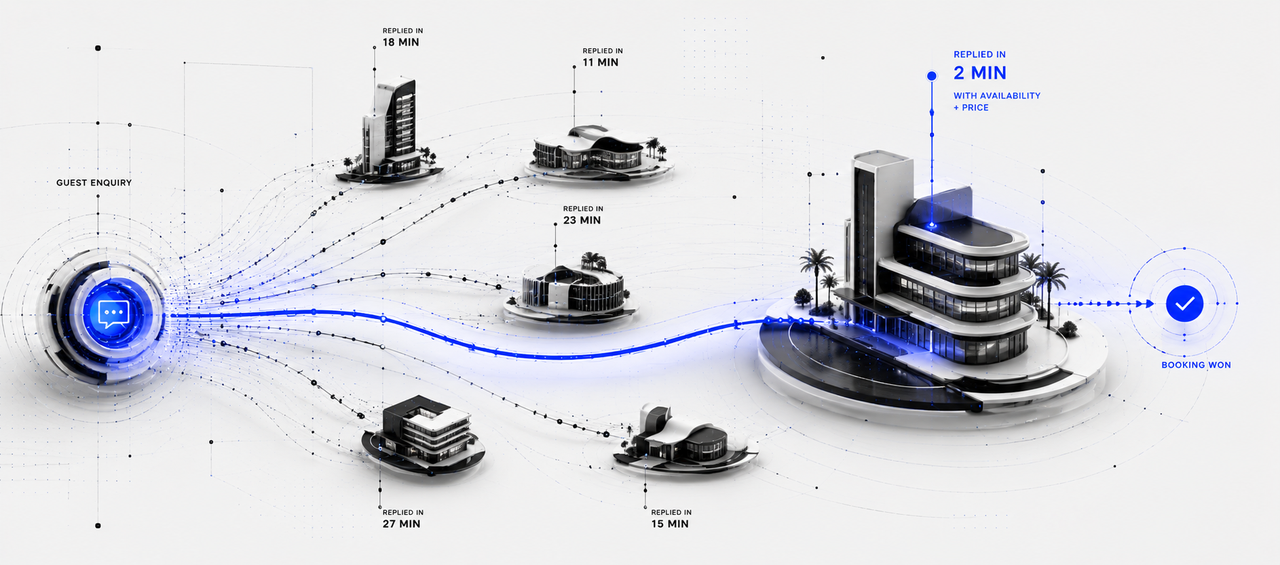
Here's a pattern that decides more Indian hospitality bookings than price or photos: a guest researching a stay messages several properties at once, on WhatsApp, often late at night. The one that replies first, and replies well, usually wins. The others are answering a guest who has already booked somewhere else.
That makes response speed a revenue metric, not a customer-service nicety. And most independent properties are quietly losing bookings to it every day without realizing.
Nobody planning a trip enquires with a single property and waits. They fire off the same question to five, compare who responds, and move fast. In that scramble, the first good answer has an enormous advantage, because it reaches the guest while they're still deciding, and the later replies reach a guest who has moved on.
So you're not competing on whether you reply. You're competing on whether you reply first, while the guest is still in the market.
Speed is a revenue metric
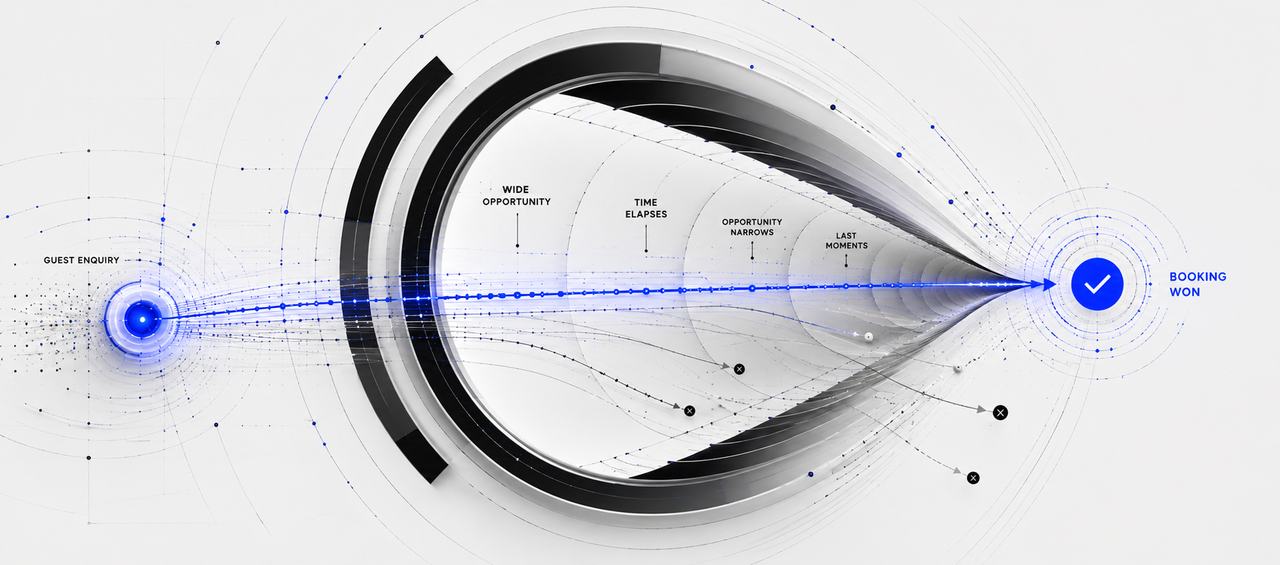
Once you see enquiries this way, the numbers reframe themselves. A reply that comes four hours later isn't a slightly slower good service. It's a lost booking, most of the time, because the window closed. A property that answers in seconds, any hour, is capturing bookings that a property answering "when someone gets to it" never sees.
The gap between those two properties isn't effort or warmth. It's speed. And speed at 11pm, when a lot of these enquiries land, is exactly when a human team isn't watching the inbox.
A four-hour reply isn't slower service. In a market where guests message five places at once, it's usually a lost booking.
Fast and human, not fast or human
The trap is thinking the choice is between fast-but-robotic and slow-but-personal. It isn't. The winning setup is both: an instant first response that answers the obvious questions and holds the guest's attention the moment they message, then a smooth handoff to a human to actually close, warmly, with the guest already engaged.
That's the honest role for automation here. Not replacing the host, but making sure the guest never sits in silence during the minutes that decide the booking. The moat is a system that removes the manual gap between "guest messaged" and "someone replied," so you're always the first good answer, and a person still closes the deal.
The test
Look at your enquiries from the last week and the time between the guest's message and your first reply. Anywhere that gap is hours, especially at night, is a booking you probably lost to whoever answered faster. Closing that gap to seconds, without losing the human who closes, is one of the cheapest revenue gains an independent property can make.