How to Turn Sales Calls Into Useful Business Knowledge
Every sales call is full of intelligence about your market and your customer. Almost all of it dies the moment the rep hangs up.
6 min read • 23 Aug 2026
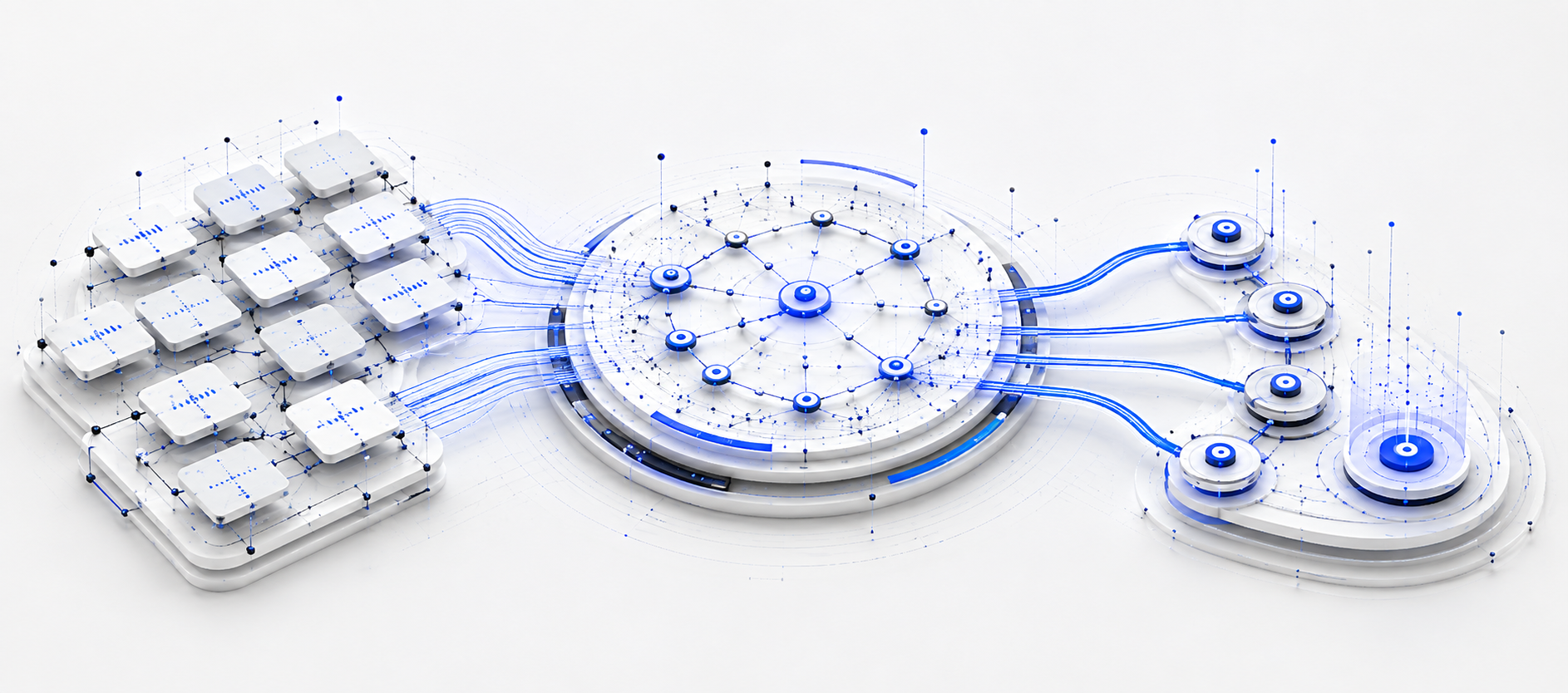
The intelligence that dies at "goodbye"
A rep gets off a call knowing a dozen useful things: the real objection, the budget hint, the competitor mentioned, the feature the customer actually cared about. Then they type three lines into the CRM, if that, and the rest evaporates. Multiply that across every rep and every call, and a business is throwing away its single richest source of customer intelligence, daily, because capturing it by hand is tedious and nobody does it well.
The conversations already happen. The waste is that almost nothing survives them.
The problem isn't that reps are lazy. It's that fully capturing a call by hand is genuinely hard and slow, so the honest human response is to capture a fraction and move to the next call. The CRM note becomes a thin shadow of what was actually said.
So the objections that keep recurring never get counted. The competitor that keeps coming up never gets flagged. The feature request mentioned on twenty calls never reaches product, because each rep only saw their one call and none of it was ever written down in a form anyone could add up.
Manual note-taking is the bottleneck
Every attempt to fix this with discipline fails, because you're asking a person to do expensive manual work at the exact moment they're lowest on time and highest on the urge to move on. Better templates and stern reminders don't beat that. The manual step is the bottleneck, and willpower is not a scalable fix for a manual bottleneck.
That's the tell that this is an automation problem, not a training problem.
Where the model earns its place
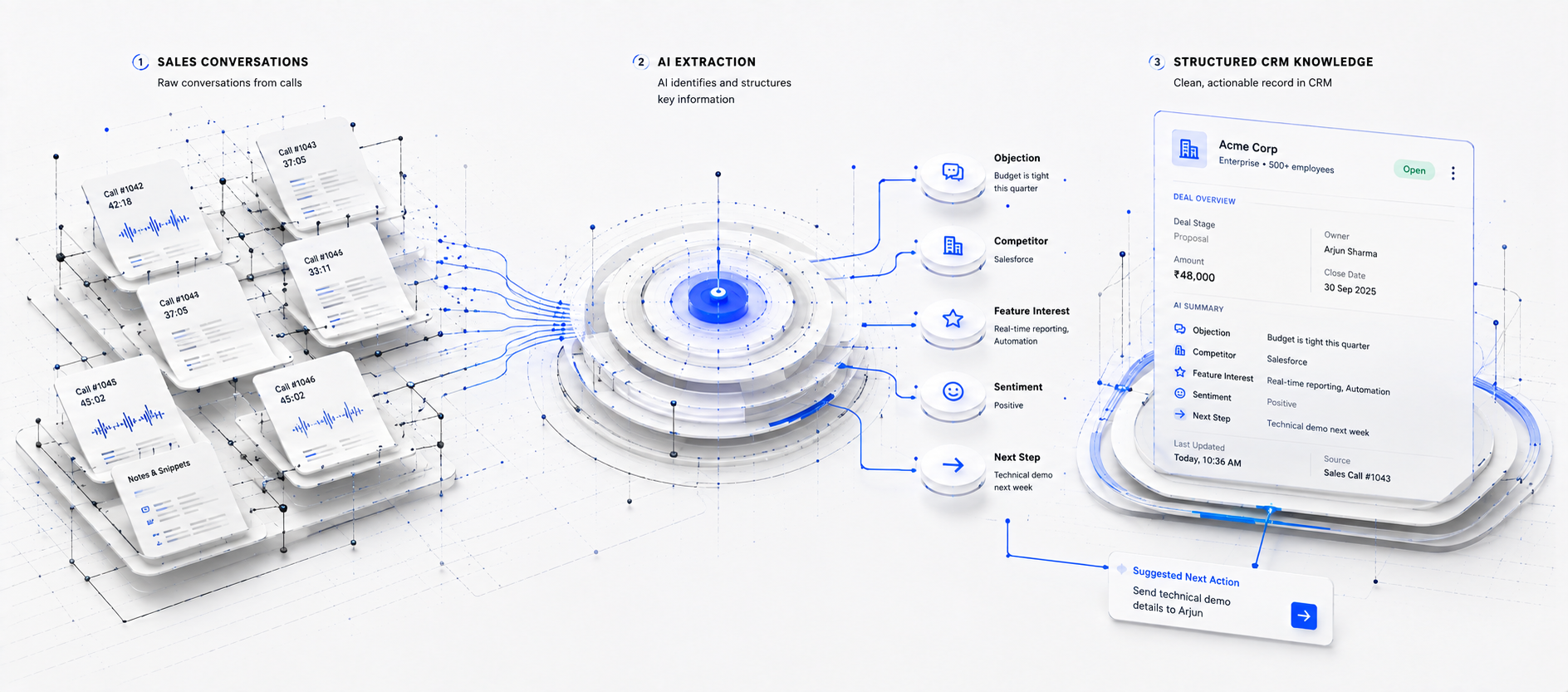
This is a spot where a language model genuinely earns its keep. Post-call AI takes the conversation and does the tedious capture automatically: it summarizes what happened, extracts the objection, the next step, the competitor, the sentiment, and structures it, then updates the CRM itself so the rep doesn't have to. The rep gets their time back, and the business gets a clean, structured record of what was actually said.
The moat is what that unlocks at scale. Once every call is captured in a consistent, structured form, the calls stop being one-offs and become a knowledge base. You can finally see the objections across all reps, the competitor mentioned most, the feature asked for repeatedly, patterns no single rep could see and no manual note ever captured. That's the difference between a call that happened and a call you can learn from.
The test
Ask what your team learned from last week's calls, across everyone, not from one rep's memory. If nobody can answer, the intelligence is being generated and thrown away every day. Capturing it automatically, turning conversations into structured knowledge and letting the CRM update itself, is how those calls stop being disposable and start compounding into something the whole business can use.