How to Track Deliveries When GPS, SIM, and Lock Data Disagree
One tracking source can lie. Three can disagree. The job is turning conflicting signals into a single location you can actually trust.
5 min read • 23 Aug 2026
How to Show Customers a Real Delivery Date Before They Buy
5 min read • 23 Aug 2026One source is a single point of failure
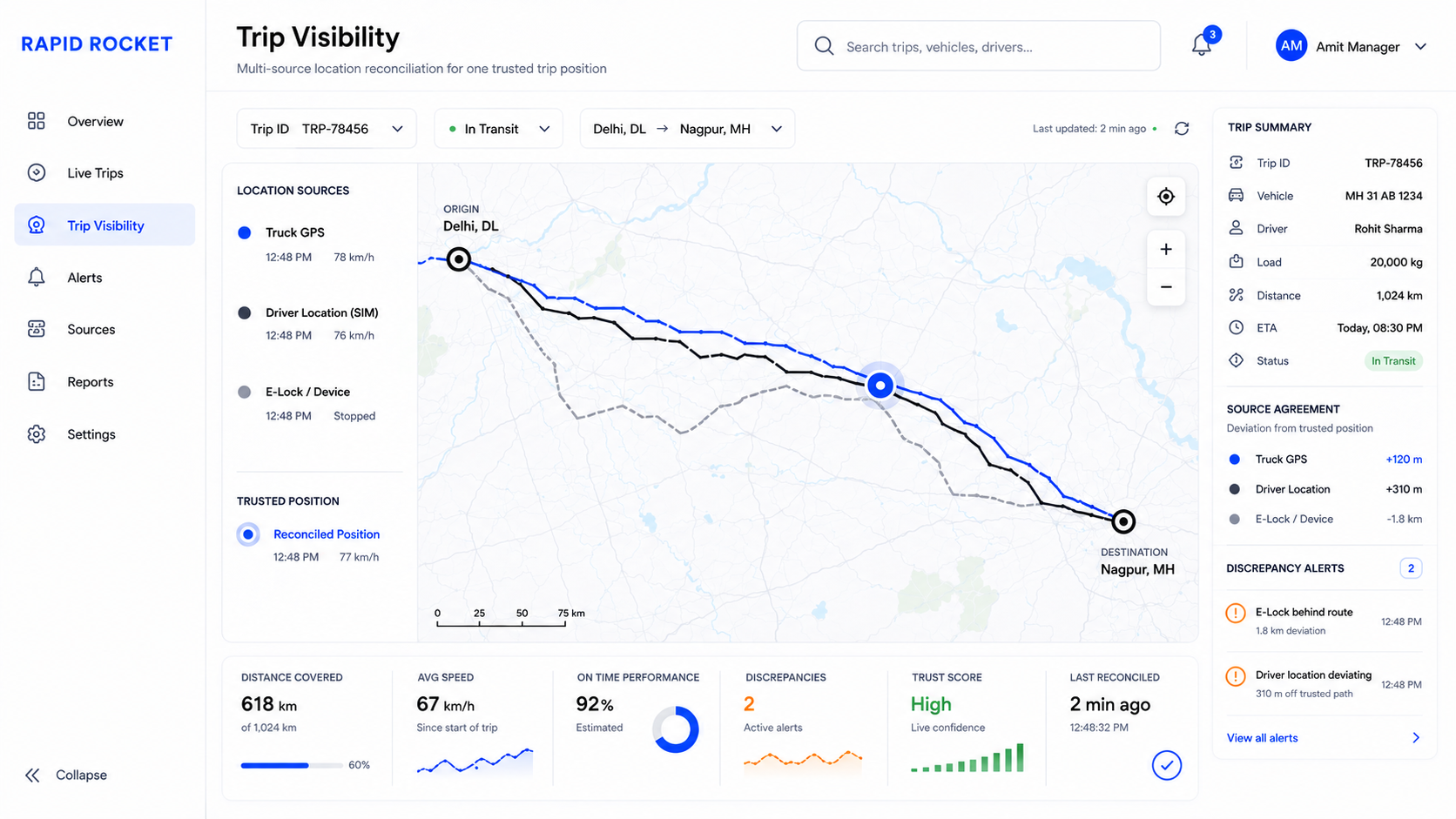
Ask three tracking systems where a truck is and you can get three different answers. The GPS device on the vehicle says one thing. The driver's SIM location says another. The electronic lock on the cargo says a third. Each is telling the truth as it sees it. None of them, alone, is the whole truth.
Most tracking setups pick one source and hope. That works until the day it matters, and on that day the single source is exactly the one that's wrong.
A device can lose signal. A SIM can ping off a distant tower. An e-lock can report late. Whichever single source you've built your visibility on, its failure is your blind spot, and you won't know you're blind until someone asks where a shipment is and the answer is confidently wrong.
Relying on one feed isn't visibility. It's a bet that your chosen feed won't be the one that fails today.
When the sources disagree, which do you trust?
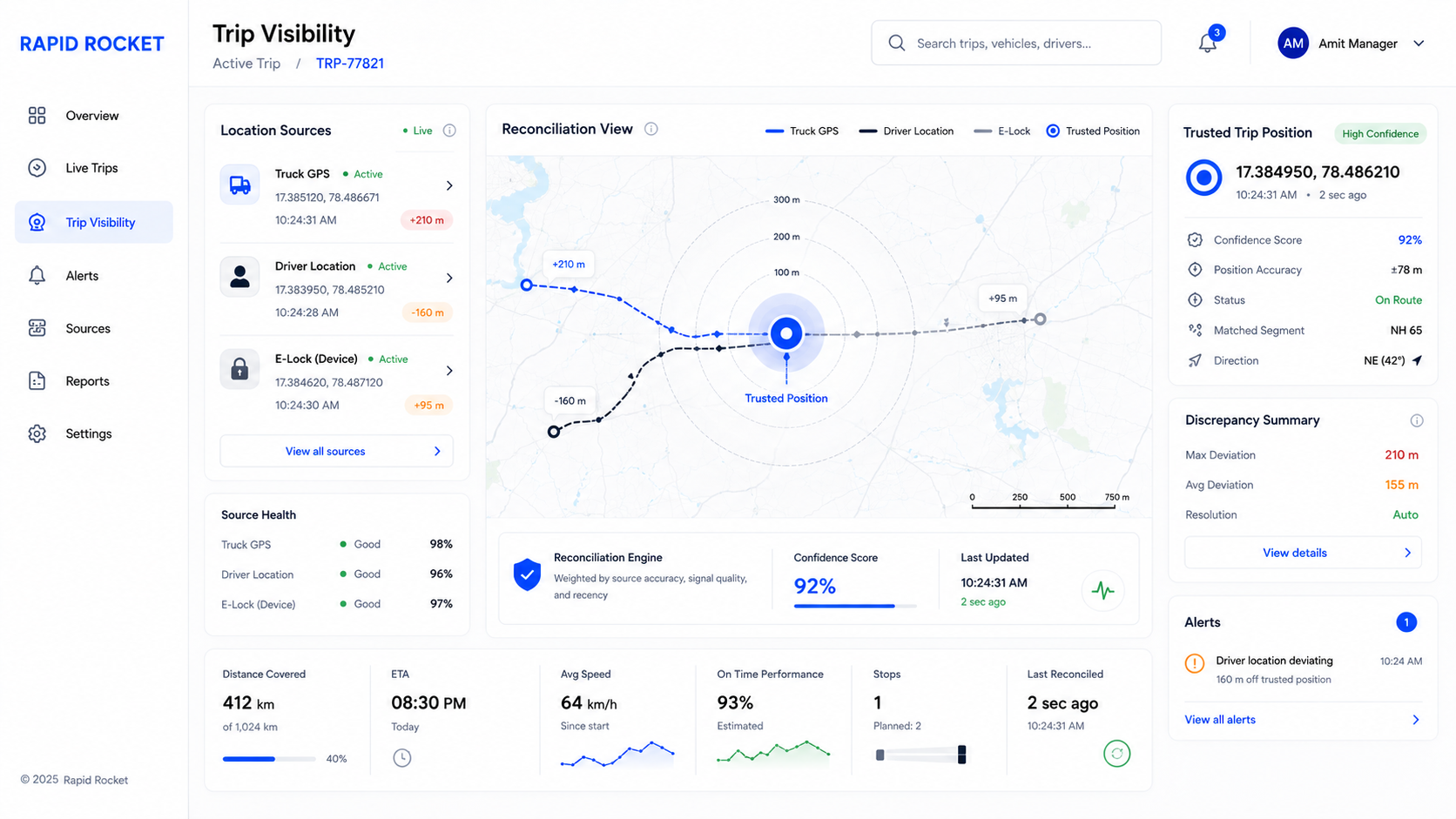
The moment you bring multiple sources together, you face the real problem: they won't always agree. And a system that just shows you three conflicting locations has handed the problem back to a human to resolve by hand.
The useful move is to treat disagreement as a signal, not noise. When the sources line up, you have a confident location. When they diverge beyond a sensible threshold, that gap is itself worth flagging, because a truck whose GPS and SIM suddenly disagree by a wide margin is telling you something, a spoofed device, a swapped SIM, a cargo that parted ways from its vehicle.
When your tracking sources suddenly disagree, that disagreement is often the most important thing they'll tell you all day.
Fusion plus discrepancy detection
So the system does two jobs. It fuses the sources into one best-estimate location per trip, and it watches the distance between them. When they agree, you get a clean answer. When they drift apart past a set threshold, it raises an alert with the exact gap between each pair, so an operator can look at the one trip that needs attention instead of watching all of them.
That's the difference between a map full of dots and a system that tells you which dot to distrust.
Why a trip summary beats five dashboards
The last piece is human. An operator managing hundreds of trips can't read raw feeds from three systems per vehicle. So the system collapses each trip into a plain summary: where it is, whether the sources agree, what happened, what needs a look. The raw data is there underneath, but the daily job runs on the summary.
The test for whether you need this is simple. When someone asks where a shipment is, does your answer come from one source you're quietly hoping is right, or from several that agree. If it's the former, you don't have trip visibility. You have a single point of failure with a map on top.